







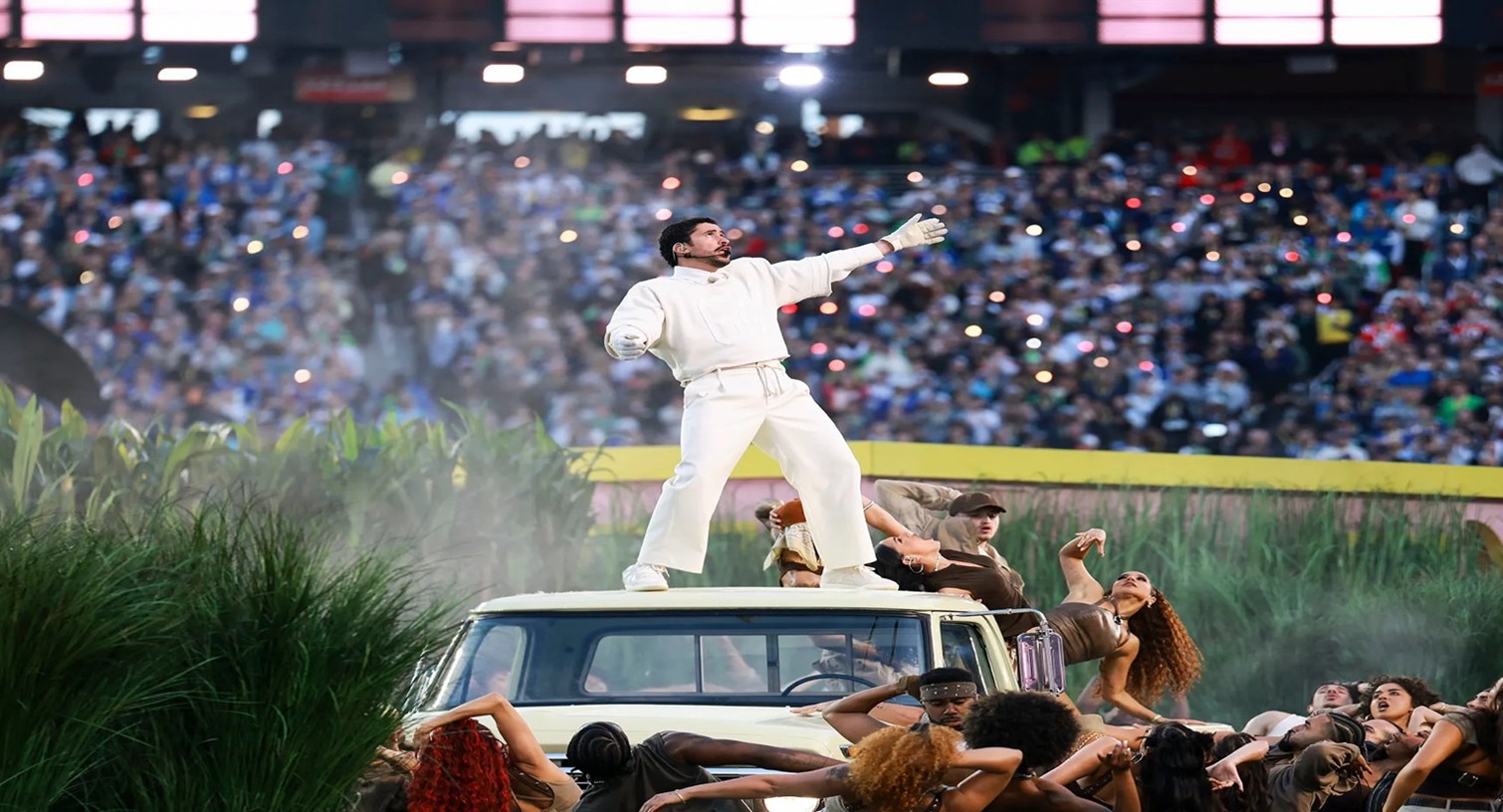
When the lights dimmed at Super Bowl LX and the first notes of Bad Bunny’s music echoed through the stadium, viewers knew they were about to see something different.
The Puerto Rican superstar took the halftime stage in front of one of the largest television audiences of the year and delivered a performance almost entirely in Spanish, the first time in Super Bowl history that a headlining act had done so.
Backed by vibrant choreography, pulsing reggaetón beats, and bold visuals celebrating Latino culture, Bad Bunny turned the field into a high-energy tribute to his heritage. Dancers waved Puerto Rican flags, and the stage lit up in red, white, and blue hues inspired by the island. The crowd roared along with the traditional Latin rhymes, some singing every word, others simply absorbing the spectacle.
For many viewers, the moment felt historic. Supporters flooded social media with praise, calling the performance empowering and long overdue. In a country where millions speak Spanish at home, they saw the show as a reflection of America’s changing cultural landscape.
Fans described feeling seen and represented on a stage that has long symbolized mainstream American entertainment. “I was there for the vibes,” said junior Dominick Nedelchev.
But not everyone reacted the same way. Critics argued that the Super Bowl, often considered a unifying national event, should feature entertainment accessible to the broadest audience possible.
Some viewers said they felt disconnected from lyrics they didn’t understand. “[The halftime show] was more for the message, and I didn’t know much of his music which didn’t make me enjoy it,” said senior Zachary Connor.
Others questioned whether the performance emphasized cultural identity in a way that felt political rather than purely artistic. Within hours, the halftime show had become more than just entertainment. News outlets ran headlines highlighting the divided reaction. Commentators debated whether the performance symbolized progress or polarization. Online discussions quickly shifted from music to bigger questions about identity, language, and what defines American culture.
Was this a bold celebration of diversity or a departure from tradition?
The debate revealed something larger than a halftime show. It showed how a 13-minute performance can reflect deeper conversations happening across the country about representation, belonging, and the evolving meaning of national identity. Whether praised or criticized, Bad Bunny’s Super Bowl appearance made one thing clear: it wasn’t just a performance people would forget the next day. It was a cultural moment ,one that sparked discussion far beyond the stadium lights.