



















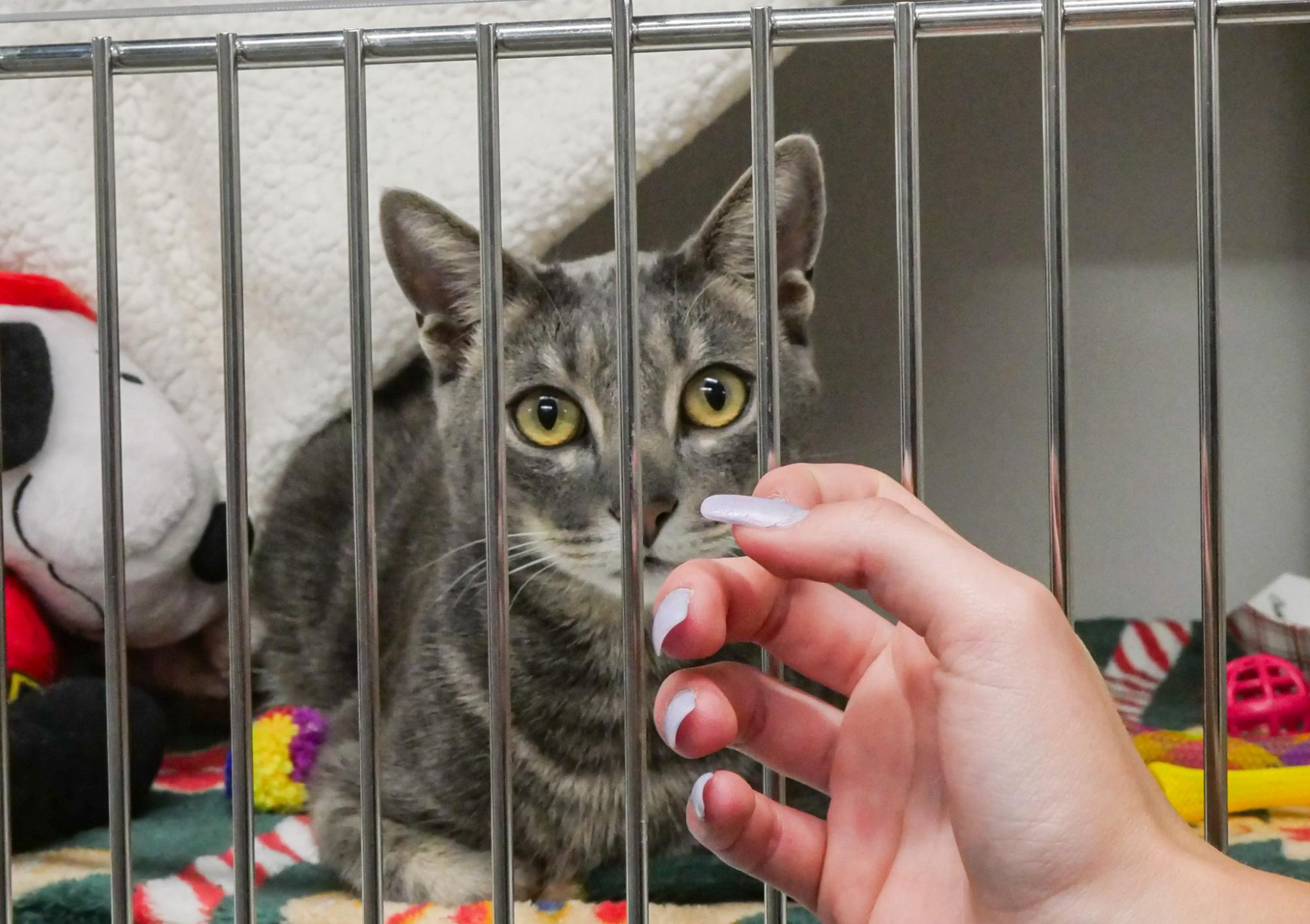
Animal shelters are more than temporary homes for stray or abandoned pets as they are places where compassion meets action. Every rescued animal carries a story of survival and hope, and every adoption represents a new beginning. Shelters like Pasco County Animal Services and national organizations such as Humane Society of the United States work daily to connect these animals with people who can offer them care, stability, and love.
These shelters strengthen the communities by encouraging empathy, volunteerism, and responsible pet ownership. They remind us that helping animals is not just about the rescue but also about building a community that is able to depend on one another.
For people who are considering adopting a pet, shelters provide both opportunity and guidance. Many animals arrive as strays, while others come sick, injured, or transferred from other shelters.
According to Veronica Sanchez, an Education and Outreach Coordinator at Pasco County Animal Services, one of the most important benefits of adopting from a shelter is the impact it has on the animal’s life. “You’re helping to save the life of an animal who maybe came from a not-so-great situation,” she said. She also emphasized that most animals are carefully cared for and evaluated before being placed for adoption, to ensure the animal is ready for a safe home.
Shelters also focus on educating potential adopters, so they are prepared for the responsibility. Sanchez recommended that families think carefully before choosing a pet. “Ask yourself, am I looking for an energetic dog? Am I looking for one that’s super chill?” she said. She explained that understanding your lifestyle helps you match with the right animal, making the adoption more successful for the pet and the owner.
Some people may buy a pet and expect it to immediately be all friendly and comfortable in the home, which is not the same way every animal may react in a new home. Sanchez mentioned the “3-3-3 rule,” which explains that animals often need more time to adjust, ranging from about three days, three weeks, and three months, to a new home.
One of the most common misconceptions about shelters is that they only have certain types of animals or that they are “kill shelters.” Sanchez clarified that Pasco County Animal Services is a municipal shelter that works hard towards a Save 90 goal, meaning at least 90% of animals are saved through adoption, reunification, or transfer. “We strive to be a Save 90 shelter,” she said, adding that euthanasia only happens in cases of serious medical suffering.
Community support plays a significant role in keeping animal shelters running, and both Veronica Sanchez and Jessie Andre emphasize that even small actions can make a meaningful impact. Sanchez explained that even simple involvement like following shelter social media pages, sharing adoptable pets, and attending events can significantly increase an animal’s chances of finding a home.
She also pointed out that volunteering is an important way the community contributes, with roles ranging from dog walking and cat socialization to medical and administrative support. According to Sanchez, the process is accessible through an online application and orientation, as well as attending a class to be educated on what to do, making it easy for new volunteers to get involved.
Similarly, Jessie Andre, Lead Adoption Coordinator at Pinellas Humane Society, highlighted how essential personalized care is in the adoption process. “We give very individualized care to every animal. We get to know each of the animals personally, and we recommend animals to families based on what they’re looking for,” she said. This approach shows how shelters function as more than temporary housing, instead they work as matchmakers between animals and potential adopters.
Christy Layton, Volunteer Coordinator at Hillsborough County Pet Resource Center, also emphasized the importance of adoption and community involvement. According to Layton, adopting from a shelter not only helps animals find loving homes, but also gives stray animals the opportunity to experience care and stability that many have never had before. “It’s helping out those dogs that don’t have homes,” she said. “Some of these guys have never been in homes before, so it’s giving those guys an opportunity to be in that home and that loving care.”
Layton explained that the majority of animals entering shelters are strays, although shelters also take in animals from hoarding cases, quarantines, and owner surrenders. She noted that Hillsborough County Pet Resource Center tries to provide resources to owners before surrender becomes necessary, helping pets stay with their families whenever possible.
In addition to adoption services, Layton described the extensive medical and behavioral support shelters provide. Animals are spayed or neutered, vaccinated, microchipped, and given surgeries or treatments if needed before adoption. She also explained that shelters work to support adopters after pets go home by providing information, crates when available, and resources to help pets adjust successfully to new environments.
Both Sanchez and Andre had addressed common misconceptions about shelter animals, and Layton reinforced these ideas by explaining that many people assume shelters only have “bad dogs” or certain breeds. However, she explained that shelters house a variety of animals with different personalities and temperaments. “Most of these guys out here are just super sweet and they’re looking for that right fit and that loving home to go into,” Layton said.
Layton also stressed how influential the community can be in supporting shelters. She encouraged people to promote adoptable pets online, donate food, bedding, toys, and treats, or volunteer at shelters through activities such as enrichment, cleaning, and events. According to Layton, these efforts not only support the shelter itself but also help families within the community who may need pet resources.
Shelters also provide essential daily care for thousands of animals each year. At Pasco County Animal Services alone, approximately 5,000 to 6,000 animals pass through annually. Staff members clean kennels, provide medical care, organize playgroups, and work closely with animals to improve their behavior and adoptability. These efforts ensure that each animal receives attention, exercise, and socialization while they wait for a permanent home.
Animal shelters ultimately serve as a bridge between hardship and hope. They support animals in need while also giving people the chance to experience companionship and responsibility. Whether through adoption, volunteering, or donations, community members play a key role in this process. By supporting shelters, people are not just helping animals; they are strengthening the entire community through kindness and care.