

























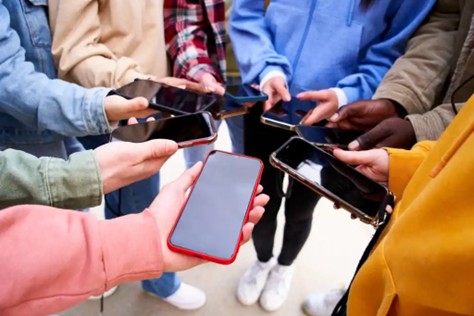
The constant use of smartphones has dramatically reshaped the learning environment, with children opting to text or play games during class time, as opposed to focusing on what is being taught. Not only does this result in a shift away from their focus on education, but studies determine that it also causes their academic performance to weaken as their grades decline.
So, what is the solution to all this? Banning cellphones altogether is a policy many states and districts have opted to implement in their schools; however, many experts believe that technology still serves a significant purpose in the classroom, warning against the ban on these devices, despite how addictive.
The distraction epidemic
With the increase in popularity of social media sites and the increase in teen users, high school students are becoming more addicted to these various platforms.
High school students want to stay updated with what is relevant and want to connect with their friends online constantly. However, the consistent usage of social media for these students leads to a distraction regarding their education and causes a lack of focus when trying to complete academic work.
There is clearly a correlation between screen time and academic performance as data collected has shown. Cell phone use in the classroom disrupts the learning process as proved by test scores and reports of classroom disruptions. As explained by Excelined , a policy developer for education, “The best way to eliminate any distractions is to ban phones from the classroom altogether”. The data provided also indicates that the more leisure time students spend on social media during the school day, the lower their performance is in math, demonstrating that there is real data collected among students’ behaviors in proving the negative effects of constant time spent online and a drop in grade performance.
Teachers also express concerns regarding the development of students’ attention spans, which are essential to proper academic performance. “Students are so reassured by that sound. They’re flipping it over and looking at the screen without even realizing that they’re doing it,” said Mrs. Gilzow, as said in neaToday. The various amounts of data collected prove how much social media addiction in high school students is taking a serious toll on their learning environment due to the constant interruptions in thought processing.
Constant social media distraction among high school students leads to negative developmental aspects. For example, the addiction students have to these apps can lead to disruptions in healthy family functioning and peer relationships, which further lowers the students’ overall academic performance. A study conducted by The University of Delaware finds, “Social media not only distracts from the students’ learning environment but also distractions from important social aspects of their lives and relationships with others in which further disrupts education.” The high school students’ time online can distract them from the more important parts of their lives, which entail various negative effects on their academics. To succeed in school, having proper social skills and the ability to communicate needs for help in acquiring information is very necessary. The constant scrolling on apps such as TikTok, which includes short videos, can ruin proper attention span development in these teens. This increases their likelihood of not being able to focus on school.
Further supporting the claim of phones being a constant distraction, a notification popping up on a student’s screen can immediately throw them off focus. Schools with lenient phone policies often allow free time when classwork is completed. Due to this, students often try to get through their work quickly so they can hop back onto their social media, distracting them from putting effort into what is important. Lack of studying is also derived from excessive time on social media. Instead of studying or working on academics, students would rather use their already limited free time to scroll away on social media apps.
A Key Example – The TEDx and Florida Bill
Dr. Justin Romano, a child and adolescent psychiatrist, argues in his TEDx talk that the world is facing a new kind of pandemic, not by a disease, but by an addiction to smartphones and social media. He explains how technology has been designed to trigger the brain’s natural reward systems, delivering constant stimulation and satisfaction through notifications and constant scrolling.
Certain apps, such as TikTok and Instagram, adapt to our personal habits, creating a dependency that can be as powerful as substance addiction. While Romano admits that it may be unrealistic to expect people to abandon technology completely, he emphasizes awareness as the first step in regaining control over this “pandemic”.
Florida’s Legislature has recently recognized this growing issue through a series of education reforms, notably House Bill 379 (Technology in K–12 Public Schools) and House Bill 1105 (Education Bill, 2025). Together, these bills represent one of the nation’s strongest policies toward smartphone and social media addiction in schools, wanting to restore focus to the classroom and protect students’ mental well-being.
The HB (House Bill) 379, passed in 2023, solidifies strict boundaries for cell phone and social media usage in public schools. It requires every district to adopt an Internet safety policy that limits students’ online access to certain websites and blocks access to social media platforms on school networks. The law also bans the use of TikTok on any district-owned device or network.
Two years later, HB 1105 (2025) built upon this foundation by expanding the restrictions even further. Whereas HB 379 banned phones only during instructional time, HB 1105 now prohibits the use of wireless communication devices during the entire school day for students in certain grades. This shift shows evidence that even brief exposure to phones between classes can disrupt concentration.
Both bills connect to what Dr. Romano talks about. He says that smartphones are like “ticking devices in our pockets,” built to grab our attention and keep us hooked by giving quick bursts of pleasure.
The new laws are trying to step in and break that habit, at least while students are at school. By cutting back on phone use and teaching students how to use technology in healthier ways, Florida isn’t just banning phones, it helps students stay focused and find a better balance in their lives.
However, as Romano notes, awareness is also important. Policies alone cannot solve the psychological attachment students have developed toward their devices. That is why the educational lessons of HB 379 are so crucial: lessons on digital citizenship, privacy, and mental health to empower students to understand the mechanisms behind their addiction.
Overall, Florida’s recent education laws, especially HB 379 and HB 1105, address what Dr. Romano calls a “pandemic of addiction” by targeting the technological habits that shape modern youth.
A public consensus
In general, most experts agree on this: the phone ban can only be a net positive. So far, it has come off as a success.
“[Students] are having deeper conversations. They’re not diving into their pockets at the first opportunity,” quotes Howard Hepburn in an interview. Hepburn is the superintendent of Broward County. He supervises about a quarter of a million students and teachers. In general, he reported the policy was going well. There were only about 1000 violations of the policy found during the fall. This is much better than expected numbers, but Hepburn also notes that the violations are often more directly confrontational. The issues are more about open defiance, he says.
Sponsors of the bill claim that it was initially created “to protect kids from pornography, likening the age verification to similar requirements for alcohol and firearms”, said Tony Overdorf. A parent is now able to make the decision if they would like to have their child, who is 14 or 15, on social media or not. This is a “step in the right direction”, proponents of the bill say. The bill, in general, is expected to carry a positive impact among schools across the state.
Some argue that the bans may carry a secondary benefit: a decrease in violence in schools. Neola is a privately owned organization that develops policies for school districts. This organization claims the decrease in violence will be directly correlated with the newfound phone bans. “While social media itself isn’t a direct cause of violence, its use can contribute to factors that may escalate conflict or aggression among students,” argues Neola, a policy maker for school districts around the country.
Neola argues that, while technology can be helpful, the risks far outweigh the benefits. “The ban is a step in the right direction,” they say in an official company statement. A blanket ban “may not be ideal,” they say, but general restrictions can drastically aid attention in the classroom.
Among the benefits of a ban, the organization lists face-to-face interaction, safety and security, and a reduction in cyberbullying. The benefits, to Neola, far outweigh the drawbacks.
The Los Angeles school district also took a similar ban into consideration. Their ban was largely successful as well.
Nick Melovin is an ex-teacher among the LA school districts who now resides on the board of education. He says cell phones were already an issue back in 2011, when he quit teaching.
“When I talk to teachers and administrators and parents, it’s one of the number one concerns”, said Melovin. The board believes this policy would improve the school for everyone, teachers included. Melovin also notes that adolescents who spend more than three hours a day on social media may be at heightened risk of mental illness.
As hundreds of school districts across the country implement restrictions, it’s clear that the time to make a decision is now.